-
C/O 2221 Remington Ave, Ontario,California

Hypoallergenic Breast Petals: Do They Work for Eczema-Prone Skin?
The dress fits. The neckline looks right. You’ve finally found something you want to wear.
Then you remember the adhesive.
If you have eczema, that tiny detail can change the whole outfit plan. A pair of breast petals promises discreet coverage, but you’re thinking about tomorrow morning: itching, a petal-shaped rash, and another product joining the pile of things your skin apparently hates.
So, do hypoallergenic breast petals work for eczema-prone skin?
Sometimes. They may provide comfortable coverage when your skin is calm and you tolerate the materials. But they don’t treat eczema, and the word “hypoallergenic” doesn’t guarantee that you won’t react. Adhesives, friction, and other contact triggers can still cause trouble, especially when eczema has already weakened your skin barrier.
My rule is simple: skin first. The outfit can negotiate.
Table of Contents
What does “work” actually mean here?
We need to separate two questions that product pages often squeeze into one.
Can breast petals conceal nipples under clothing? That’s their job.
Can they do that without upsetting eczema-prone skin? That depends on your skin, the product, and what happens during wear.
Picture two people using the same pair. One has eczema on their hands but healthy, comfortable skin on their chest. The other has itchy, cracked patches around the areola.
Those situations need different decisions. Nipple eczema can involve dryness, scaling, pain, cracks, and sometimes weeping skin; damaged skin also raises the risk of infection.[dermnetnz]
I wouldn’t treat those two shoppers as interchangeable just because both tick the “sensitive skin” box.
And I wouldn’t treat a fashion accessory as a dressing. Breast petals offer coverage. Your eczema care plan serves another purpose entirely.
Can you trust the word “hypoallergenic”?
I treat it as the start of a conversation, not the end.
In its guidance on cosmetics, the US Food and Drug Administration says no federal standard or definition governs “hypoallergenic.” Cosmetic manufacturers don’t have to submit evidence of hypoallergenicity to the FDA before using that claim.[fda]
That guidance concerns cosmetics. It doesn’t establish the legal classification of every nipple cover or breast petal, so I wouldn’t stretch it into a blanket statement about all clothing accessories.
The useful takeaway? A comforting label tells you less than a clear material description and relevant testing information.
When a seller says “hypoallergenic,” I want to know:
- What touches the skin?
- What adhesive does the product use?
- Does the formula contain fragrance, latex, or other ingredients that matter to my known allergies?
- What testing supports the claim?
- Did that testing include people with eczema, or only volunteers without that condition?
Those questions aren’t fussy. They’re practical.
“Suitable for sensitive skin” sounds lovely. “Here’s the adhesive information, here’s what we tested, and here are the limits” gives you something to work with.
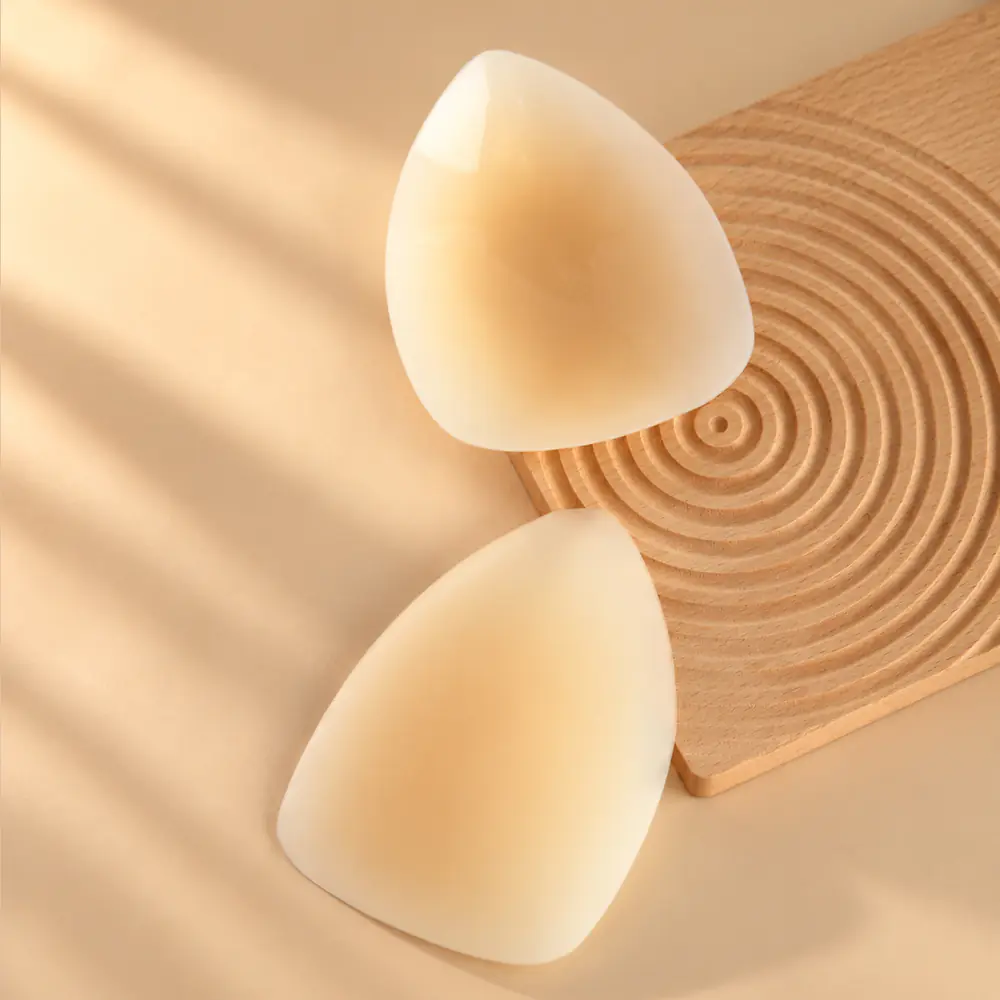
Why does eczema make adhesive products more complicated?
Your skin barrier helps keep moisture in and unwanted substances out. Eczema can disrupt that barrier, leaving skin dry and more vulnerable to irritation. People with atopic dermatitis can also develop allergic contact dermatitis.[dermnetnz]
That doesn’t mean every person with eczema will react to every adhesive.
It means the margin for error may shrink.
A little friction that barely bothers someone else might leave you sore. A cleanser that feels fine on your arms might sting around an irritated areola. And a product that worked last month might cause trouble during a flare.
DermNet separates irritant contact dermatitis from allergic contact dermatitis because they involve different processes. Irritation comes from direct damage; contact allergy involves an immune response to a particular substance. Both can produce an eczema-like rash.[dermnetnz]
This matters because “I reacted” doesn’t automatically mean “I’m allergic to silicone.”
The adhesive, cleaning product, remover, rubbing, or another exposure might deserve the blame. A clinician can help untangle that when reactions keep returning.
Is that rash an allergy, irritation, or an eczema flare?
You probably can’t settle the question from a mirror check.
An itchy outline that follows the petal’s shape gives your clinician a useful clue, but it doesn’t prove a diagnosis. Allergic contact dermatitis often follows the contact area, while irritation can also appear where a product rubs or touches the skin.[dermnetnz]
Timing adds another wrinkle.
Allergic contact dermatitis commonly appears 24–72 hours after exposure. You might feel comfortable all evening and notice the rash the next day. Some people also develop a contact allergy after years of using a substance without trouble.[dermnetnz]
So a comfortable first hour doesn’t promise a comfortable tomorrow.
Here’s how I’d think about a reaction:
| What happens | What it means for your next step |
|---|---|
| Burning or discomfort starts during wear | Stop wearing the product rather than trying to push through |
| An itchy rash appears later | Consider delayed contact allergy as one possibility, not a self-diagnosis |
| The same reaction keeps returning | Ask a dermatologist about the cause and whether patch testing would help |
| Skin blisters, weeps, or becomes increasingly painful | Seek medical advice instead of testing another pair |
Contact dermatitis can cause blistering, weeping, swelling, and persistent eczema. Recurrent symptoms deserve proper assessment.[dermnetnz]
Which part of a breast petal might cause trouble?
The material against your skin deserves attention, but don’t stop there.
An adhesive petal may bring several exposures into the picture: the backing, the adhesive, any added ingredients, and whatever you use to clean or remove it.
DermNet lists rosin in adhesive plasters among contact allergens. It also identifies fragrances, preservatives, rubber-processing chemicals, and acrylates among substances that can cause contact allergy in various products. That list doesn’t mean every breast petal contains them. It explains why product-specific information matters.[dermnetnz]
A shopper with a known allergy needs details, not a promise that a product feels “gentle.”
The same goes for soothing extras. Aloe, chamomile, tea tree oil, lanolin, and vitamin E may sound reassuring, yet DermNet lists them among possible contact allergens relevant to nipple eczema.[dermnetnz]
Natural doesn’t mean harmless.
I’d rather see a straightforward formula than a long list of botanical ingredients that asks sensitive skin to do more homework.
Are silicone breast petals better than fabric ones?
Not automatically.
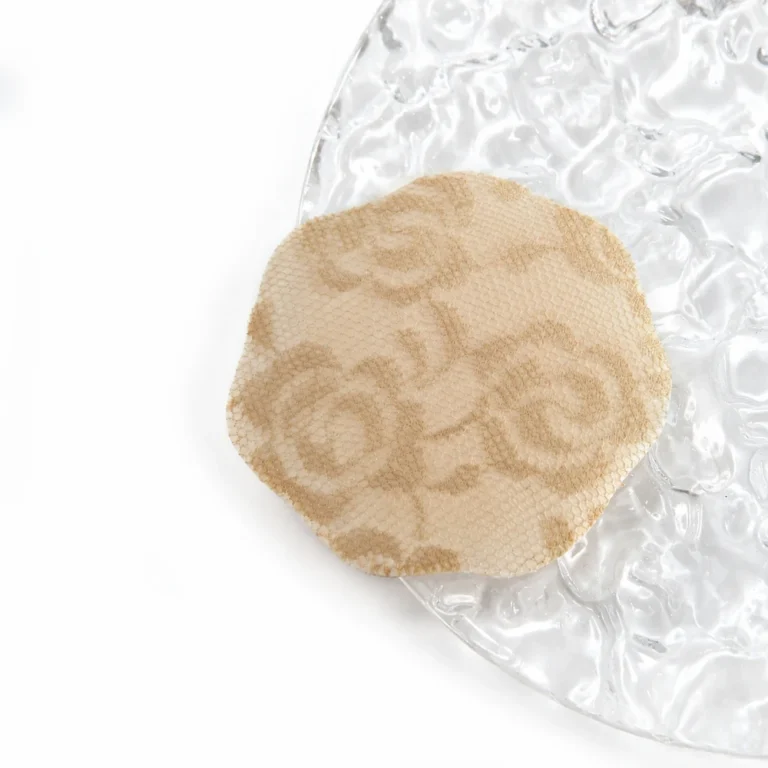
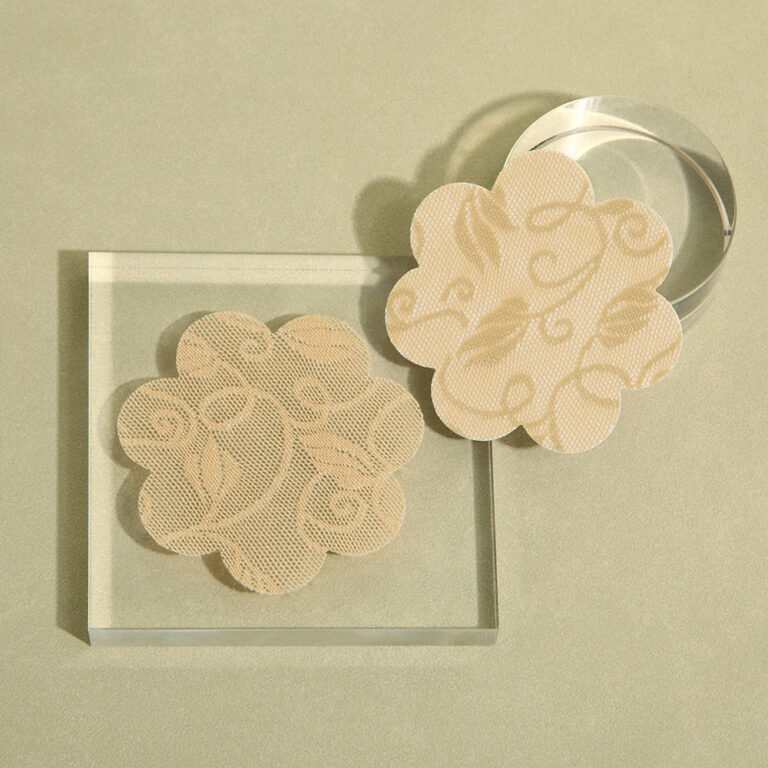
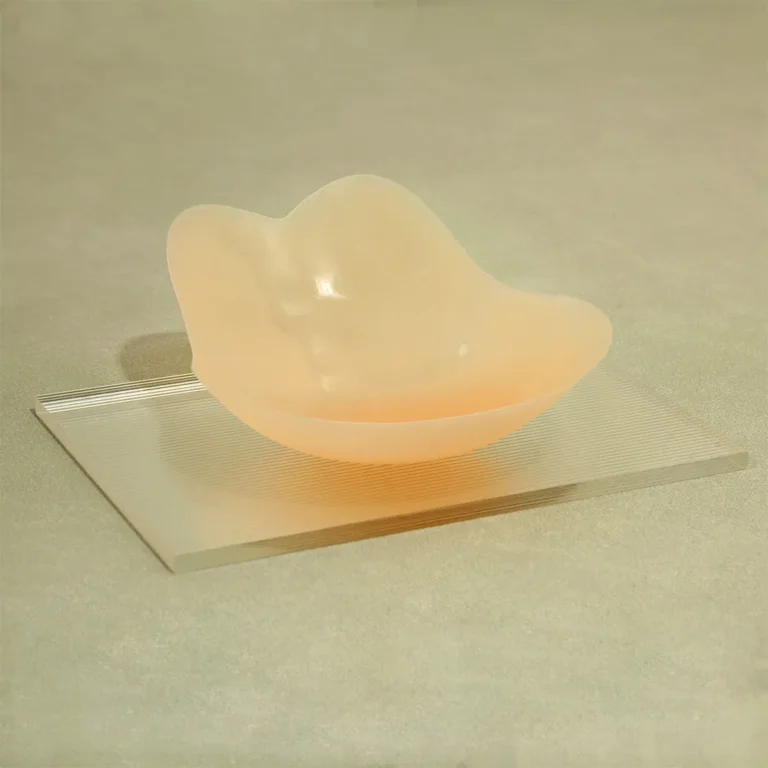
A silicone nipple cover and a fabric petal describe different product constructions. Those names don’t tell you everything about the adhesive or prove which one your skin will tolerate.
I wouldn’t choose by touch alone. A soft backing can still carry an adhesive you react to.
If you’re comparing fabric nipple patches, ask the same questions you’d ask about silicone: what touches the skin, what creates the hold, and what instructions govern removal?
Think of these as shopping categories, not safety rankings.
| Product description | Question worth asking |
|---|---|
| Silicone petal | Does it use adhesive, and if so, which type? |
| Fabric petal | What adhesive and other skin-contact materials does it contain? |
| Adhesive-free cover | How does it stay in place, and what garment does it need? |
| Fragrance-free product | What other materials might still matter to my allergies? |
| “Hypoallergenic” product | What evidence supports that exact claim? |
My preference? Clear answers over impressive adjectives.
If a seller can’t explain the skin-contact materials, you don’t have enough information to judge suitability for a known contact allergy.
Should you wear petals during an active eczema flare?
I wouldn’t apply fashion adhesive over active nipple or breast eczema.
If the area feels itchy, sore, cracked, raw, or weepy, give the coverage experiment a miss and follow your eczema treatment plan. Nipple eczema already involves a damaged barrier, and cracks can allow secondary infection. Eczema care focuses on avoiding triggers and helping the barrier recover.[dermnetnz]
A smooth-looking outfit doesn’t justify making an angry patch angrier.
What if the petal has a non-sticky center?
That design may avoid adhesive directly over the nipple, but check the whole contact area. The adhesive border might still touch irritated areolar or breast skin.
I’d ask a different question: “Does every part of this product land on healthy, comfortable skin?”
If not, choose something else.
And if you need a dressing for damaged skin, ask a clinician what to use. Don’t assume a breast petal can fill that role because its shape looks convenient.
What if your skin looks healthy today?
That changes the discussion.
A history of eczema elsewhere doesn’t automatically rule out every nipple cover. But it also doesn’t let anyone promise that a particular pair will suit you.
If your chest skin feels normal, you have no known adhesive allergy, and your clinician sees no reason to avoid the product, a cautious trial may help you judge comfort.
Not on the wedding day.
Not five minutes before the taxi arrives.
I’d make the first trial low-pressure, at home, with another clothing option nearby. Keep the wear brief, follow the manufacturer’s instructions, and stop if discomfort starts.
Then pay attention afterward. Delayed contact reactions can take 24–72 hours to appear, so don’t judge the whole experiment by how it feels when you first put the petals on.[dermnetnz]
That slower approach lacks glamour. It also leaves room to change your mind.
Can you patch-test breast petals at home?
A home trial can show that a product causes trouble. It cannot certify that the product is safe for you.
People often use “patch test” to mean “try a little somewhere first.” Dermatologists use the term for a diagnostic process that helps identify contact allergens. DermNet calls clinical patch testing the gold standard for diagnosing allergic contact dermatitis when chronic or recurrent symptoms suggest contact allergy.[dermnetnz]
Those aren’t the same thing.
If plasters, medical tapes, or other adhesive products have caused significant reactions before, ask a dermatologist before trying breast petals. Bring the packaging and material information if you have them.
For a home tolerance check, follow the product instructions and your clinician’s advice about location and duration. Don’t test on active eczema, and don’t leave an irritating product in place just to finish the suggested time.
A negative result also has limits. Different body sites, longer wear, repeated exposure, and changing skin condition can affect the outcome; exposure duration and skin integrity both influence contact sensitisation.[dermnetnz]
I’d call a trouble-free trial encouraging.
Not permission to ignore symptoms later.
How do you prepare the skin without drying it out?
This is where ordinary nipple-cover advice can clash with eczema care.
You’ll often hear, “Scrub the area clean and remove every trace of oil.” For eczema-prone skin, I’d avoid that approach.
NHS guidance for breast and nipple eczema advises avoiding soaps and shower gels that dry the skin. It recommends a suitable soap substitute or emollient wash, gentle drying, and ongoing moisturising—even when the skin looks normal.[ncic.nhs]
Your goal isn’t squeaky-clean skin. Your goal is comfortable skin.
If you plan to try adhesive petals on healthy skin:
- Use your usual tolerated cleansing method.
- Pat dry rather than rubbing.
- Avoid experimenting with a new cleanser that day.
- Don’t use harsh preparation methods just to improve grip.
- Follow the product’s skin-preparation instructions without abandoning your eczema care.
If the cover only stays on when you dry your skin out or skip necessary care, that product may not fit your needs.
That’s a product mismatch. Not a personal failure.
Can you put moisturiser or eczema medicine underneath?
Don’t change your treatment routine to make an accessory stick.
Moisturisers help restore the skin barrier in nipple eczema, and clinicians may recommend topical medicines for active symptoms. DermNet also notes that the thin areolar skin absorbs topical corticosteroids readily.[dermnetnz]
That makes improvising with medicine and an overlying cover a poor idea.
Ask your prescriber before putting a breast petal over a treated area. Don’t assume that the product and medication work together simply because each one seems gentle on its own.
There’s a practical conflict here, too: adhesive instructions may ask for product-free skin while your eczema plan calls for moisturiser.
When those instructions clash, let the treatment plan win.
I’d choose an undershirt or a different bra before I’d rearrange prescribed care for a backless dress. The dress has no medical training.
Does a shorter wear time make petals safe?
Shorter wear doesn’t erase an allergy.
Exposure duration and frequency can affect contact sensitisation, but even tiny amounts of an allergen can trigger dermatitis in someone who already has an allergy to it.[dermnetnz]
So I can’t offer an “eczema-safe” number of hours. Neither should a product page without evidence specific to its claim.
If you tolerate a product during a cautious trial, use it only as directed and for the time you actually need it. Don’t interpret a long-wear claim as a challenge.
Also consider the event itself. Heat, sweating, and rough clothing can trigger breast eczema, so an outdoor summer party may ask more of your skin than a short dinner in a cool room.[breastcancer]
I’d plan an exit route: another top, a soft layer, or simply permission to remove the petals.
Comfort shouldn’t depend on enduring the last three hours.
Are reusable petals more skin-friendly than disposable ones?
Neither category earns that title by default.
A reusable nipple cover may suit someone who tolerates its materials and can follow its care instructions. A disposable petal may suit another person better.
But “reusable” and “disposable” tell you about intended use. They don’t identify your allergens.
With reusable products, keep the cleaning routine simple and follow the manufacturer’s directions. Don’t add scented soap, essential oils, or a homemade disinfectant mixture in an attempt to make the pair extra clean.
Why? Because fragrance and other topical ingredients can trigger contact dermatitis, and unnecessary additions create more variables when you’re trying to work out what your skin tolerates.[dermnetnz][dermnetnz]
With disposable products, don’t improvise extra uses or add glue when the adhesive stops working.
My test would stay the same for both categories: clear materials, comfortable wear, careful removal, and no symptoms afterward.
How should you remove them if your skin reacts?
Stop wearing them, but don’t rip them off in a rush.
Follow the product’s removal directions. Ease the edge back slowly while supporting the nearby skin, and avoid repeated tugging or scrubbing.
If the instructions call for a remover, use one you already tolerate. This isn’t the moment to discover whether your skin likes a fragranced cleansing oil.
After removal, keep things quiet: gentle care, no more adhesive, and your usual clinician-approved eczema routine. Avoid known irritants and allergens rather than trying several new soothing products at once.[dermnetnz]
Seek medical advice for significant blistering, broken skin, worsening pain, or signs of infection. If a reaction keeps returning, ask about assessment for contact allergy instead of buying a fifth “extra gentle” pair.[dermnetnz]
And if you develop breathing difficulty or rapid swelling of your lips, tongue, or throat, seek emergency help immediately.
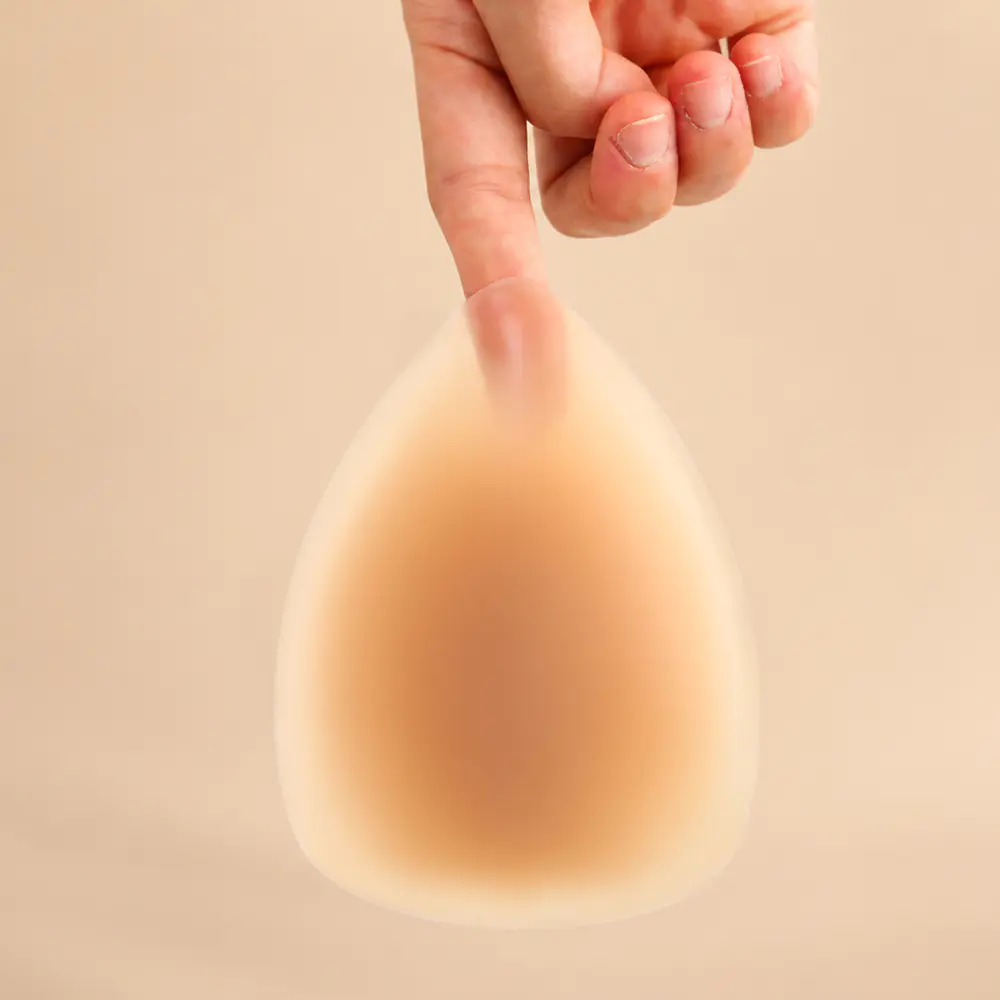
What can you wear instead?
Sometimes the best nipple cover for eczema-prone skin is no adhesive cover at all.
I know. Not the shopping answer you expected.
Consider a soft cotton layer, a comfortable lined bra, or a garment with its own lining. NHS breast-eczema guidance recommends cotton next to the skin and avoiding temperature extremes.[ncic.nhs]
A loose insert inside a supportive garment may also offer coverage without sticking anything to your chest. Check the fabric and fit; a non-adhesive option can still rub.
Adhesive-free silicone covers offer another product category to investigate, but don’t confuse “no glue” with “no possible irritation.” Friction itself can contribute to irritant contact dermatitis.[dermnetnz]
The point isn’t to find a universally perfect accessory.
It’s to remove the exposure that bothers you while keeping the coverage you want.
Sometimes a lined top solves the whole problem. Quietly. No special remover required.
When should a nipple rash prompt a medical appointment?
Don’t keep calling a rash “just eczema” if it doesn’t behave like your usual eczema.
Book an appointment for persistent nipple or areolar changes, especially a one-sided rash that doesn’t improve, unexplained discharge, bleeding, a new nipple change, or ongoing pain.
Several conditions can resemble nipple eczema. DermNet advises clinicians to consider infections, contact allergy, and other skin conditions; it also discusses ruling out mammary Paget disease in persistent, one-sided nipple eczema that doesn’t respond to treatment.[dermnetnz]
That doesn’t mean a petal-shaped rash signals cancer.
It means guessing has limits.
A clinician can examine the area and decide whether you need a different treatment, allergy testing, or further investigation. Bringing photos and a timeline of product use can make that conversation more useful.
Your skin doesn’t owe the outfit a favour
Imagine two versions of the same evening.
In one, you use a pair you already tolerate on calm skin, enjoy dinner, and forget about them.
In the other, your skin already feels sore, but you apply the petals anyway because the packaging says “hypoallergenic.”
I wouldn’t make the same recommendation for both.
The label can’t tell you how your skin feels today. You can.
So ask the unglamorous questions before the glamorous event: Is my skin comfortable? Do I know what touches it? Have adhesives caused trouble before? Can I choose another option without disrupting my eczema care?
If the answers don’t add up, put the petals back in the drawer.
Wear the lined top. Choose the soft bra. Let the neckline change.
You deserve to enjoy the evening without bargaining with an itch.